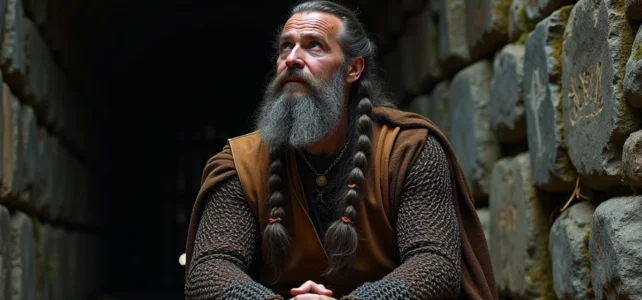
The final words of Ragnar Lothbrok are among the most quoted scenes in contemporary Viking culture. The phrase attributed to the legendary warrior, spoken from a pit of snakes, has traversed the centuries in various forms. However, this famous quote does not come from a direct historical account: it is the product of medieval texts written long after the supposed events, later reworked by the television series Vikings aired on History Channel.
Ragnar Lothbrok between history and medieval literary compilation
Before examining his last words, a preliminary question must be asked: Did Ragnar even exist as described? Modern studies on the character converge on a clear conclusion: the figure of Ragnar Lodbrok is deemed historically dubious. Several distinct Viking leaders were likely merged into a single character over the course of the narratives.
The two main sources reporting his death are the Gesta Danorum, a Latin chronicle compiled by Saxo Grammaticus at the turn of the 13th century, and the Ragnars saga loðbrókar, an Icelandic saga written during a comparable period. These texts are not accounts of observed events. They are late fictional compilations, written several centuries after the Viking era, in a context where the heroic staging of death served specific literary and dynastic purposes.
This intersection of legendary narrative and television adaptation fuels the current fascination with the character. A comprehensive file details the last words of Ragnar Lothbrok on Le Petit Castor, tracing the different versions of the scene.
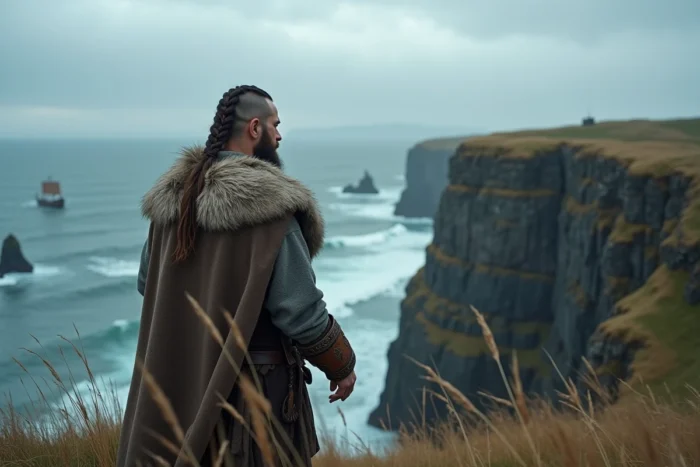
Last words of Ragnar in the sagas: the metaphor of the boar and the piglets
The most frequently quoted phrase roughly translates to: “The piglets would grunt if they knew what the old boar suffers.” In the saga’s narrative, Ragnar utters these words as he lies dying in the snake pit of King Ælla of Northumbria. The animal metaphor serves as a warning: Ragnar’s sons, compared to young boars, will avenge their father as soon as they learn of his fate.
A narrative device for dynastic legitimization
Recent historiography interprets this metaphor more precisely than popular summaries. The scene primarily serves to legitimize the vengeance of Ragnar’s sons, notably Ivar the Boneless and Björn Ironside. By placing a prophecy of retaliation in the mouth of the dying father, the text transforms the raids led by his sons into acts of filial justice, not mere plundering expeditions.
This narrative mechanism is not anecdotal. In Norse literature, the last words of a hero function as a moral legacy. They compel the next generation to act. The boar’s phrase does not describe an emotional state: it triggers the continuation of the narrative and justifies the Great Pagan Army that will invade England according to tradition.
Vikings on History Channel: rewriting and cultural impact of the death scene
The series Vikings, created by Michael Hirst, offered its own version of Ragnar’s death in season 4. Travis Fimmel’s portrayal gave the character a different tone than that of the sagas. The television Ragnar goes beyond the animal metaphor. He delivers a longer monologue, including the phrase “I am the master of my destiny,” which is absent from medieval sources.
What the series adds to the sagas
The difference between the two versions sheds light on how each era constructs its heroes. Here are the notable discrepancies between the saga texts and the television version:
- In the sagas, Ragnar addresses his enemies with a coded metaphor, intended to be relayed to his sons. The message is indirect, almost cryptic.
- In the series, the monologue addresses both the viewer and King Ælla. The character speaks of destiny, faith in the Norse gods, and his own acceptance of death. The tone is introspective.
- The series removes the strictly dynastic aspect to emphasize the hero’s individualism, a trait much more contemporary than medieval.
The television version has largely supplanted the saga text in the collective imagination. Online searches for “Ragnar’s last words” predominantly refer to the scene portrayed by Travis Fimmel, not the Norse text.
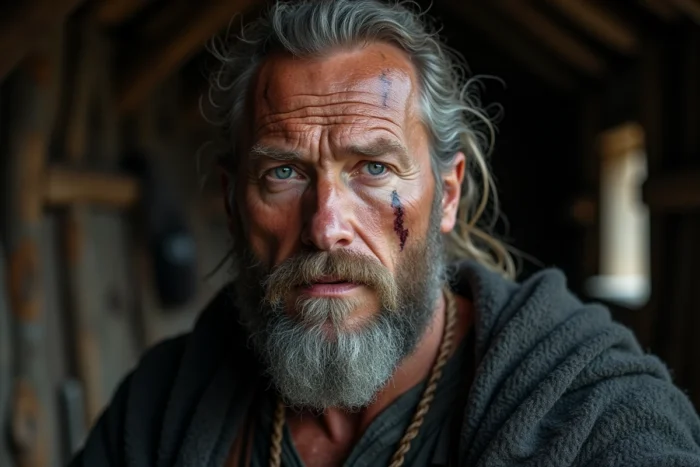
Ragnar Lothbrok and the snake pit: a recurring motif in Nordic literature
Death in a snake pit is not unique to Ragnar. This motif appears in other Scandinavian and Germanic tales, reinforcing the hypothesis of a borrowed narrative scheme rather than a real biographical event. The torture by snakes represents a particularly degrading death in the Norse world, reserved for figures whose demise must provoke proportional vengeance.
No archaeological source confirms the existence of this pit or the precise identity of the king who allegedly ordered the execution. The available data do not allow for conclusions about the historical reality of the scene. This documentary ambiguity has not prevented the narrative from being transmitted with remarkable effectiveness, precisely because its function is not informative but symbolic.
Why Ragnar’s last words still fascinate
The persistence of this scene lies in its narrative structure. A condemned father who, in his agony, triggers the storm that his sons will unleash upon his tormentors: the scheme works in any cultural context. The sagas constructed it, the series amplified it, and social media transformed it into a viral quote detached from any historical context.
The words attributed to Ragnar Lothbrok remain above all a medieval literary motif that has become a phenomenon of popular culture. Their power does not stem from their historical authenticity, but from the narrative mechanics they carry: a disguised oath of vengeance masquerading as a lament, vivid enough to traverse the centuries without losing its impact.