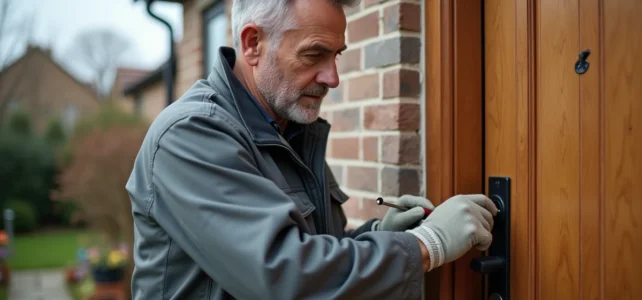
In France, burglaries account for several hundred thousand reported incidents each year. The majority of break-ins occur through the front door, and most happen during the day when the home appears empty. Protecting one’s home against burglaries and domestic disasters is less about a massive investment and more about a combination of simple measures, often underestimated by occupants.
Visible objects and daily habits: facilitators of intrusion
Articles on home security generally discuss equipment (alarms, locks, cameras). They rarely address a factor that burglars exploit beforehand: visual scouting from the street.
A ladder left against a wall, accessible gardening tools, a package left on the doorstep, or jewelry visible through a window are all signals for an intruder in the scouting phase. These everyday objects are facilitators of burglary, either because they are directly used to force access or because they indicate an absence or lack of vigilance.
Systematically storing outdoor tools under lock and key, not leaving screwdrivers or hammers lying around near access points, and ensuring that nothing of value is identifiable from the outside: these reflexes cost zero euros and seriously complicate the scouting work. To deepen these preventive reflexes, the resources published on the www Protect Habitation site detail concrete actions suitable for each type of housing.
Fake solicitors, flyers stuck in the door (to check if someone removes them), and chalk marks on walls are also part of the scouting techniques documented by law enforcement. Identifying these suspicious signs before the intrusion remains the most effective preventive measure, well before any technical installation.

Mechanical security of the home: locks and vulnerable access points
The front door concentrates the vast majority of attempted break-ins. Strengthening this access point involves choosing a A2P certified lock, a standard that guarantees tested resistance against picking, prying, and drilling. The three levels of certification (one, two, or three stars) correspond to increasing resistance times against a forced opening attempt.
Windows, patio doors, and garage doors are other favored entry points. Burglary-resistant glazing, lockable roller shutters, or security bars on openings accessible from the ground floor complete mechanical protection. The garage and basement, often neglected, deserve the same attention as the main door.
A burglar who encounters several successive mechanical obstacles generally abandons their attempt within minutes. The multiplication of physical barriers remains the fundamental principle of any home protection strategy.
Outdoor lighting and presence detection: an underutilized lever
Outdoor lighting with motion detection is a recurring recommendation in recent prevention guides, but it is rarely treated as a standalone priority measure. Yet, it is one of the most deterrent devices for a modest cost.
A spotlight that suddenly turns on as a person approaches creates a surprise and visibility effect that burglars specifically seek to avoid. Placed near main access points (entrance, garage, backyard), it complements mechanical protections without requiring a subscription or complex maintenance.
- Install at least one motion detector covering the main entrance and the backyard, the most frequently targeted areas
- Opt for low-consumption LED models with sensitivity adjustment to avoid false triggers by animals
- Couple the lighting with an indoor presence simulator (programming lights and sounds) during prolonged absences
The presence simulation, combined with responsive outdoor lighting, is sufficient to deter the majority of opportunistic attempts. Field reports vary on the comparative effectiveness of visible cameras versus lighting alone, but a well-lit and seemingly occupied home remains the best passive deterrent.
Domestic disasters: integrating fire, water damage, and climate risks into the same prevention logic
Protecting a home is not limited to theft. Domestic disasters (fire, water leaks, climate damage) often cause financial losses greater than those from a burglary. Recent prevention guides now treat these risks as a coherent set, with common reflexes.
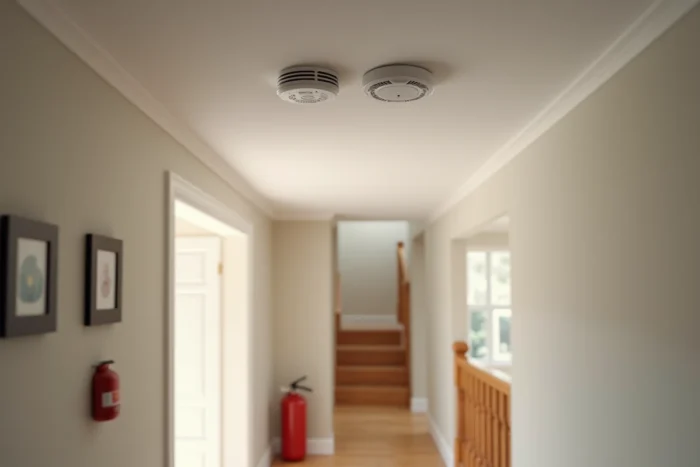
- Check the proper functioning of smoke detectors at least twice a year and systematically replace the batteries
- Have aging electrical installations checked, the leading cause of accidental domestic fires
- Shut off the water supply and unplug electrical appliances before any prolonged absence
- Secure the exterior areas (gutters, roof, nearby trees) before announced climate episodes
Maintaining detectors and monitoring installations significantly reduces the frequency of disasters. Preparing the home before an absence simultaneously protects against theft and material damage.
Reacting after a burglary: actions that affect compensation
The Ministry of the Interior explicitly recommends not touching anything after a break-in and immediately calling 17. This reflex, often forgotten in shock, directly affects the quality of the investigation and the admissibility of the insurance claim.
The filing of a complaint should occur quickly, and the declaration to the home insurance must be made within 48 hours for the theft coverage to apply. Keeping photos and receipts of valuable items in advance facilitates the assessment of damages. Without these proofs, the amount of compensation can be significantly reduced.
The theft coverage of the home insurance contract constitutes the last financial safety net. Checking the conditions of this coverage (deductibles, limits, exclusions related to the absence of security devices) before a disaster occurs avoids unpleasant surprises at the time of the declaration.
Protecting one’s home relies on a combination of simple actions, mechanical barriers, and documentary reflexes. No isolated solution is sufficient, but a home that combines several visible obstacles and rigorous administrative preparation drastically reduces risk and its consequences.