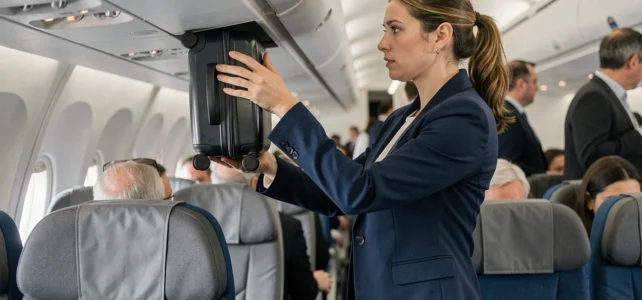
Transavia distinguishes between two types of cabin baggage: a small personal bag and a larger cabin bag. The small bag (40 x 30 x 20 cm) is included in all fares. The large cabin bag (55 x 40 x 25 cm) is only free with certain fare options. The confusion between these two categories is the primary source of unexpected extra costs.
Overall weight limit on Transavia: a misunderstood rule
Most travelers think that the 10 kg limit applies to each bag separately. On Transavia, this ceiling covers everything you take in the cabin, including both the small bag and the large cabin bag.
Specifically, if your personal bag weighs 3 kg and your cabin suitcase weighs 8 kg, you are already exceeding the limit. This rule is not always systematically checked, but when it is, the ground staff may require the excess baggage to be checked in, with an additional fee charged on the spot.
To find out the details about the allowed cabin baggage on Transavia, it’s better to inquire before arriving at the airport rather than discovering the bill at the boarding counter.
Transavia cabin baggage fee: what affects the price
On a Basic or Plus ticket, the large cabin bag is not included. It must be purchased as an option. The starting price is around 15 euros, but this initial amount is misleading.
Destination, flight date, and booking time
Transavia applies variable pricing based on destination and period. A flight to Morocco in the middle of summer does not incur the same baggage option cost as a flight to Lisbon in the low season. The higher the demand for a route, the higher the price of the option.
The timing of when you book the option also matters. Adding the cabin baggage at the time of ticket purchase is cheaper than doing it later through the booking management. Waiting until the day of departure to pay at the airport or at the boarding gate significantly increases the bill.
Priority boarding included in the price
The large cabin baggage option includes priority boarding. This is not a commercial bonus: it is an operational mechanism. The overhead compartments fill up quickly, and Transavia reserves early access for those who have paid to place their suitcase there.
In other words, the price of the option covers the suitcase and the guarantee of space in the cabin. Without this priority, a passenger with a paid cabin baggage could still be denied access to the compartments if the cabin is already full.
Full cabin and fully booked flight: the real boarding trap
This is a scenario that few passengers anticipate. Even with a Smart or Max fare that includes the large cabin baggage, the space in the overhead compartments remains subject to available capacity. On a fully booked flight, the baggage compartments become saturated well before the last boarding group boards.
Transavia may then require your cabin suitcase to be checked in at the foot of the plane. For a fare that already includes baggage, this check-in is free. The situation is different for passengers who did not book an option: their baggage is treated as unplanned checked baggage, and the fee charged at the boarding gate reaches significantly higher amounts than online booking.
How to limit this risk
- Book the cabin baggage option at the time of ticket purchase, not afterward. The price difference between an early reservation and a payment at the gate is the most avoidable extra cost.
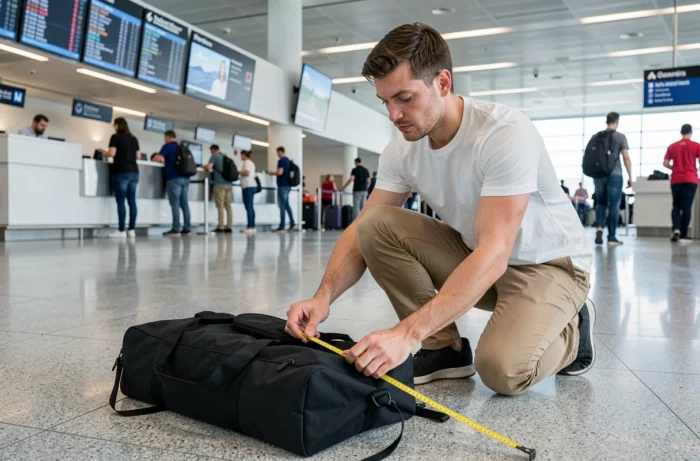
- Check the dimensions of your suitcase including handles and wheels. The size of 55 x 40 x 25 cm allows for no margin: one extra centimeter is enough to reclassify your baggage.
- Place your valuables and documents in the small personal bag (40 x 30 x 20 cm), which always remains under the seat in front of you, even if the cabin suitcase goes in the hold.
What Transavia does not charge for: items outside the baggage allowance
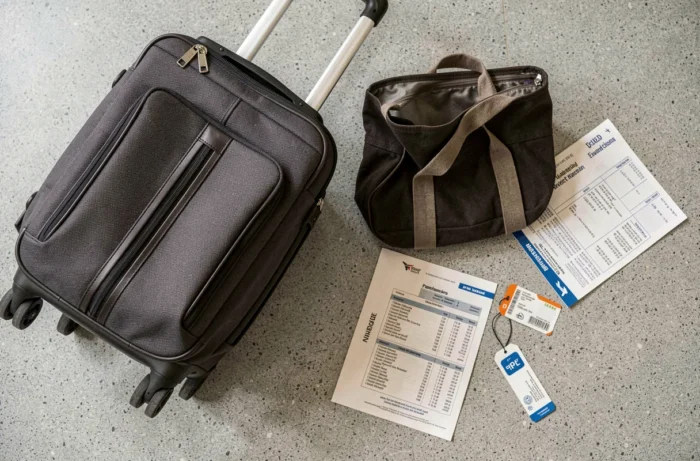
Some items do not count towards the cabin baggage quota. A coat worn on oneself, a small duty-free bag purchased after security checks, or an item for a young child (foldable stroller, car seat) are generally accepted without extra charge.
This list of exceptions varies according to the general conditions in effect at the time of the flight. It’s better to consult it before departure rather than attempting to negotiate at the boarding gate, where agents apply the rules without flexibility.
The most cost-effective reflex on Transavia remains to treat cabin baggage as a budget item from the time of booking, just like seat selection or cancellation insurance. A low-cost ticket that accumulates options paid at the last minute often ends up costing as much as a higher fare that included them from the outset.