
The label “VIR EMIS LOGITEL” on a bank statement refers to a transfer initiated via Société Générale’s remote banking platform. This online entry channel generates a technical title that regularly surprises, as it covers a completely standard SEPA operation. Understanding what an issued Logitel transfer is allows for quick identification of the nature of the movement and helps avoid confusion with a suspicious transaction.
Verification of the beneficiary’s name on a Logitel transfer
Several banks in the euro area now apply a name and IBAN matching control at the time of sending a transfer. This mechanism applies to both standard transfers and instant transfers. When a user enters an IBAN and a beneficiary’s name in the Logitel interface, the system can compare this information with that held by the receiving bank.
This control significantly reduces the risk of input errors and attempts at fraud through IBAN substitution. A rejection or warning is displayed if the data does not match, providing an additional layer of protection before final validation.
To better understand how this type of operation works, it is useful to consult what an issued Logitel transfer is and the associated SEPA rules.
We observe that this verification is unevenly deployed among institutions. The presence or absence of this control does not depend on the Logitel channel itself, but on the compliance of the beneficiary’s bank with the latest European requirements for SEPA transfers.

Logitel channel and SEPA processing: technical distinction
Logitel is an input channel, not a type of payment. Confusion persists because the bank statement label mixes the means of initiation (the online platform) and the nature of the operation (SEPA transfer). The term Logitel only indicates the technical path taken by the transfer order, not its regulatory category.
In practice, a transfer entered via Logitel can be:
- A one-time SEPA transfer to a registered or new beneficiary, executed on a standard banking business day.
- A permanent transfer scheduled for a fixed due date, useful for rents or recurring repayments.
- An instant transfer in euros, processed in a few seconds, available every day of the year, including weekends and holidays.
The execution time depends on the type of transfer chosen, not the channel. A standard transfer follows the calendar of business days. An instant transfer, when offered, is credited in a few seconds, 24/7.
Validation process and strong authentication
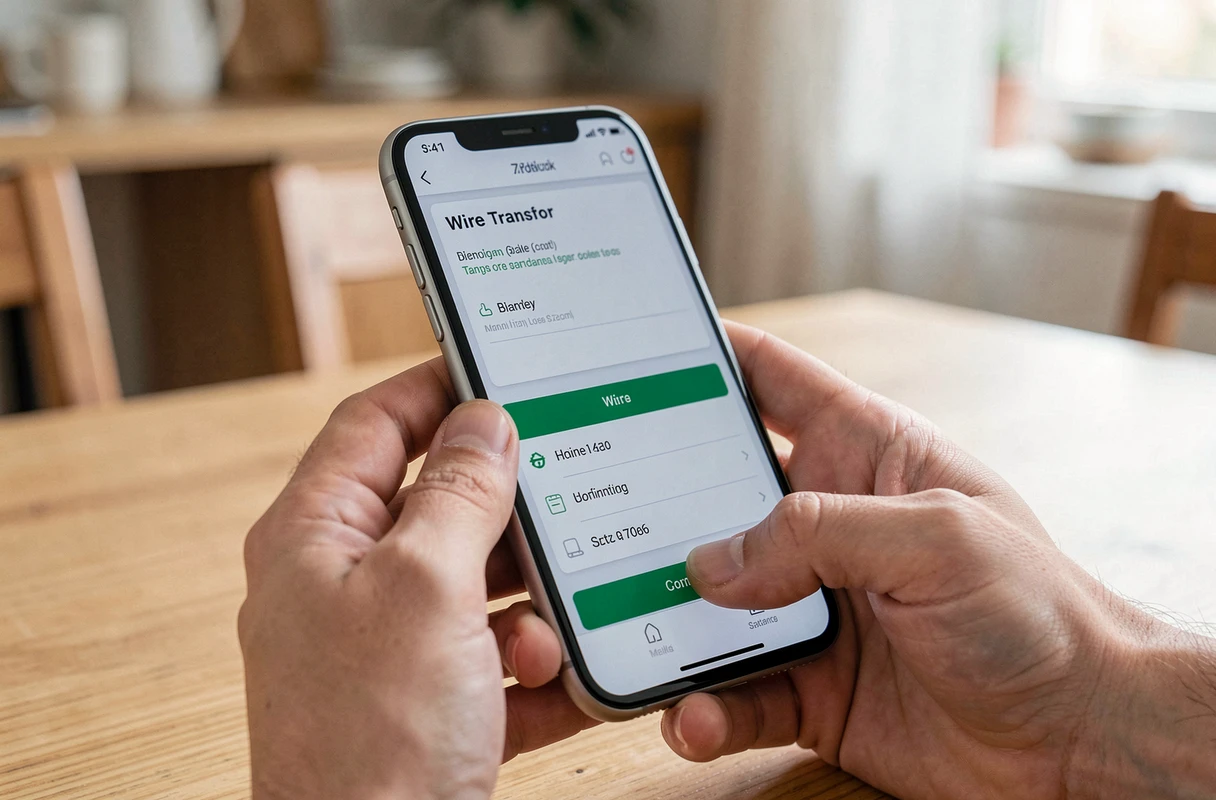
Initiating a transfer via Logitel follows a precise sequence. The user selects the account to debit, enters the beneficiary’s IBAN, specifies the amount and an optional reason, then validates the operation. Each step is subject to strong authentication in accordance with the DSP2 directive, usually via notification on the mobile app or by SMS code.
This dual validation makes it technically impossible to execute a transfer without the explicit consent of the account holder. We recommend systematically checking the IBAN before the final confirmation step, as an issued transfer generally cannot be canceled once the order has been sent to the interbank chain.
Post-issue tracking in the interface
After validation, the status of the operation appears in the transaction history with the mention “VIR EMIS LOGITEL” or “VIR EUROPEEN EMIS LOGITEL”. The details of the operation display the beneficiary’s name, the destination IBAN, the value date, and the SEPA reference.
An issued transfer generally cannot be revoked after processing. If the amount or recipient is incorrect, the only option is to contact the receiving bank to attempt a return of funds, with no guarantee of success.
Logitel label on the statement: reading and interpretation
The bank statement displays several variants of the label depending on the nature of the operation. “VIR EMIS LOGITEL” indicates an outgoing transfer initiated from the platform. “VIR RECU LOGITEL” indicates an incoming transfer from an account whose holder uses the same channel.
To precisely identify the operation, three elements are sufficient:
- The amount and value date, which allow cross-referencing with an invoice or payment commitment.
- The SEPA reference, visible in the transaction details, which uniquely identifies the transaction within the interbank network.
- The name of the beneficiary or sender, displayed in the “details” section of the operation in the online space.
If a “Logitel” movement does not correspond to any known operation, the priority is to check the complete details of the transfer before contacting customer service. In the vast majority of cases, it is a forgotten scheduled transfer or a truncated label that obscures the actual name of the beneficiary.
Operational limits of the Logitel channel for transfers
The Logitel channel shares the transfer limits set by the bank for all its online interfaces. These limits vary according to the type of account (individual or professional) and the level of authentication configured. They are not specific to Logitel.
International transfers outside the SEPA area are not always available via this channel. For a transfer to an account outside the European Economic Area, the user generally must go through a dedicated form or contact an advisor.
The irrevocability of the transfer remains the most structuring constraint. Once the order is validated and transmitted, the account holder loses all control over the funds. This characteristic, common to all SEPA transfers regardless of the channel, imposes a verification rigor at each issuance.