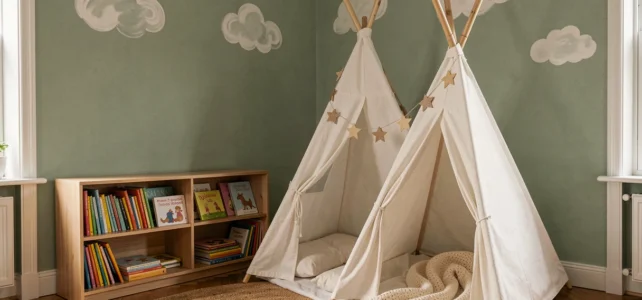
A painted wall, a bed, a shelf: most children’s rooms look alike. Decorating this space with charm and softness doesn’t require a huge budget, but rather some thoughtful choices regarding materials, colors, and air quality. Recently, regulations have imposed new requirements on furniture and paints intended for young children, changing the approach to decorating a child’s room.
Air Quality and Paint in a Child’s Room: What the Labels Say
Have you ever noticed that persistent smell after repainting a room? In a baby or young child’s room, these emissions pose a real problem. Volatile organic compounds (VOCs) can quickly accumulate in a small space, especially when the room is heavily furnished.
French and European labels now regulate emission thresholds. The European Ecolabel caps VOCs at 15 g/L for indoor wall paints. The NF Environment label limits them to 30 g/L. The Ecocert label is the strictest with a maximum of 3 g/L.
For a child’s room, it is advisable to choose paints emitting less than 1 g/L of VOCs and certified compliant with the “Toy” standard to reduce risks in case of prolonged contact. This criterion takes precedence over the choice of color. An off-white wall in healthy paint is better than a trendy blue that emits pollutants for weeks.
Specialized resources in the world of children’s rooms allow you to find furniture and items designed for this type of space, such as https://leterrierdelily.com/, which offers decoration pieces suitable for the youngest.
Soft Colors for a Child’s Room: Going Beyond Pink and Blue
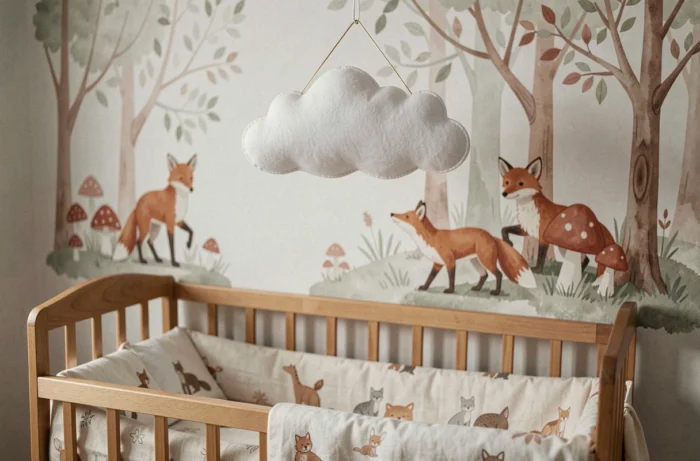
The classic pastel reflex (baby pink, sky blue) works, but it quickly confines the room to a register that becomes tiresome. A taupe, a sage green, or a pastel purple ages better than baby blue. The child grows, but the color remains.
The most reliable principle for creating a soft ambiance: choose a single dominant color, preferably desaturated, and then play with shades on textiles and accessories. An almond green wall paired with bedding in a deeper green and a cream rug creates coherence without monotony.
Neutral colors (taupe, light gray, warm white) serve as a binding element between items. They allow for easy changes in color accents over the years without repainting the entire room.
Wallpaper or Paint for the Main Wall
A wallpaper with discreet patterns (stylized animals, simple geometric designs) on a single wall adds character without overwhelming. The rest of the room remains in solid paint. One accent wall is enough to give personality to the entire room.
Be careful when choosing wallpaper: check that it is rated A+ for volatile pollutant emissions. Some cheap vinyl wallpapers emit as many VOCs as low-quality paint.
Expandable Wooden Furniture: Decorating a Room that Grows with the Child
Buying a crib, then a child’s bed, then a teenager’s bed represents three purchases over ten years. An expandable solid wood bed, adjustable in length, accommodates this growth in a single piece of furniture. Raw wood (beech, pine, birch) adds visual warmth and ages well.
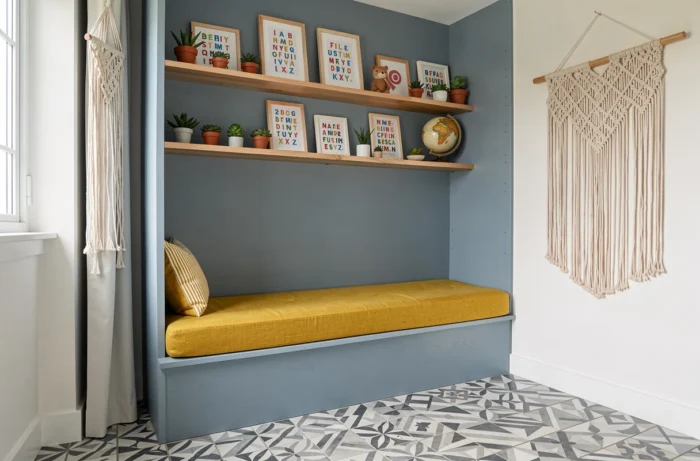
The same logic applies to the dresser. A dresser equipped with a removable changing table serves from birth and remains functional as classic storage for years. An expandable piece of furniture costs more upfront but is cheaper over time.
Why choose this over themed furniture (car bed, princess bed)? Because a child’s tastes change radically between the ages of three and eight. Simple natural wood furniture serves as a backdrop. Accessories can change with current passions.
What to Check Before Buying
- The varnish or finish of the wood: a water-based, solvent-free varnish limits emissions in the room, especially for a bed where the child spends ten hours a night
- Compliance with safety standards for children’s furniture, recently strengthened for furniture intended for baby rooms
- The actual modularity: some so-called “expandable” furniture requires the purchase of expensive extension kits, which negates the economic advantage
Textiles and Decorative Accessories: Creating Charm Without Clutter
The softness of a child’s room is largely played out in the textiles. A plush rug at the foot of the bed, a floor cushion for reading, a light voile bed canopy: these elements transform the atmosphere without touching the walls or furniture.
Natural materials like felted wool or organic cotton provide comfort and safety. Felted wool, for example, wears well and does not pill, making it suitable for play areas on the floor.
Here are some concrete ideas to add charm without cluttering:
- A low-voltage LED string light along a wooden shelf creates a soft and decorative nightlight
- Woven baskets made from natural fibers serve both as storage and decorative elements, replacing colorful plastic bins
- A mobile suspended above the reading corner (not just above the bed) draws the eye and visually structures the space
- Photo frames or the child’s drawings framed on a dedicated wall personalize the room better than any industrial sticker
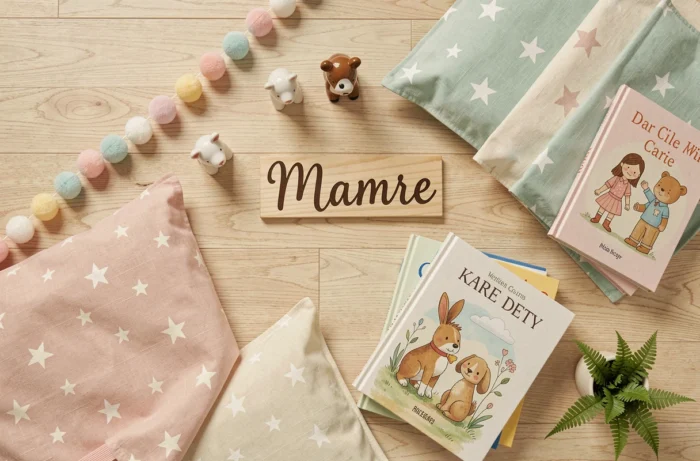
Desk Corner and Sleeping Corner: Two Ambiances in One Room
From the age of four or five, the room should accommodate a small desk for drawing or coloring. Visually separating the sleeping area from the activity area helps the child associate each zone with a function. A simple change of wall color or a different rug is enough to mark the boundary.
The desk doesn’t need to be imposing. A foldable wall-mounted wooden shelf, fixed at the right height, frees up floor space for playing and can be stored away when not in use.
A successful child’s room is not measured by the number of decorative objects it contains. The most sustainable choices focus on air quality, healthy materials, and adaptable furniture. Charm comes from well-chosen details, not accumulation.