
The fashion trend cycle has accelerated over the past decade, but the summer of 2026 marks a clear break. French law n° 2026-602, enacted on July 8, 2026, reconfigures the channels for disseminating micro-trends and imposes new reflexes on consumers as well as brands. Staying at the forefront of fashion is no longer just about scanning runway shows or TikTok hauls.
Anti-fast-fashion law and its impact on fashion trends in France
Law n° 2026-602 directly targets ultra-fast fashion platforms like Shein or Temu. Its central mechanism is an environmental penalty per product, which could reach 20 euros per item by 2030, capped at 50% of the pre-tax price. This additional cost will mechanically make disposable items that fueled the frantic wardrobe renewal less competitive.
Starting September 1, 2026, these platforms will be required to display messages about sobriety, reuse, and repair directly on their product pages, accompanied by a harmonized eco-score. The ban on advertising for these brands, including through influencers, will come into effect on January 1, 2027.
We are already observing a concrete effect on the dissemination of trends: a significant share of viral micro-trends was transmitted through sponsored hauls. Their gradual disappearance will slow the perceived pace of fashion and give weight back to brands that offer structured collections rather than continuous flow. For those who want to explore fashion on HyperScoop, this regulatory shift redistributes the cards between platforms and independent media.
Sustainability and style: materials redefining trendy fashion
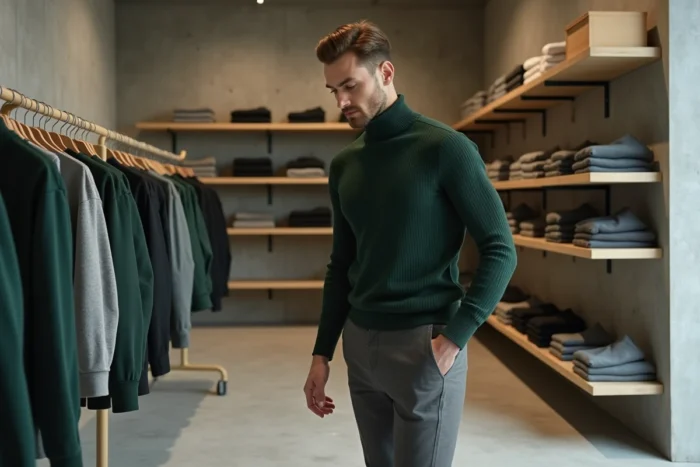
Sustainability is no longer a marketing argument; it’s a purchasing filter. The brands capturing attention this season are those that document their textile choices precisely: fiber origin, dyeing process, certification. The informed consumer no longer settles for a generic label.
Three material axes dominate current collections:
- European linen, grown without irrigation, available in deconstructed versions for fluid pants and oversized shirts suitable for heatwaves.
- Recycled knits made from industrial scraps, used by French brands for lightweight oversized sweaters, a key piece for spring-summer 2026.
- Certified organic cotton, favored for basics (t-shirts, straight dresses) where the clean cut emphasizes the quality of the drape rather than an accumulation of details.
This refocusing on material changes the very notion of trend. A well-cut garment in a traceable fabric retains its stylistic relevance well beyond a season. We recommend systematically checking the composition and origin before considering a purchase as “trendy.”
Key colors and silhouettes for summer 2026
Butter yellow emerges as the signature color of the season. Worn as a total look or as a unique touch on an accessory, it replaces the pastel shades that dominated the previous two summers. Its strength lies in its versatility: it works equally well on a babydoll dress as on a structured short jacket.
In terms of silhouettes, the barrel jean confirms its status as the dominant cut. Its wide leg that slightly narrows at the ankle creates a controlled volume, far from skinny and extreme baggy styles. Paired with a fitted top, it produces a visual balance that stylists have been exploiting from runways to accessible ready-to-wear.
The dress remains the most sought-after piece for summer. Short babydoll versions and structured beach dresses are sharing the spotlight. The common point: cuts that prioritize thermal comfort without sacrificing line. Light layering (dress over fluid pants) is gaining ground and allows for transitioning between outdoor and air-conditioned spaces.
Accessories and jewelry: fashion trends with high visual impact
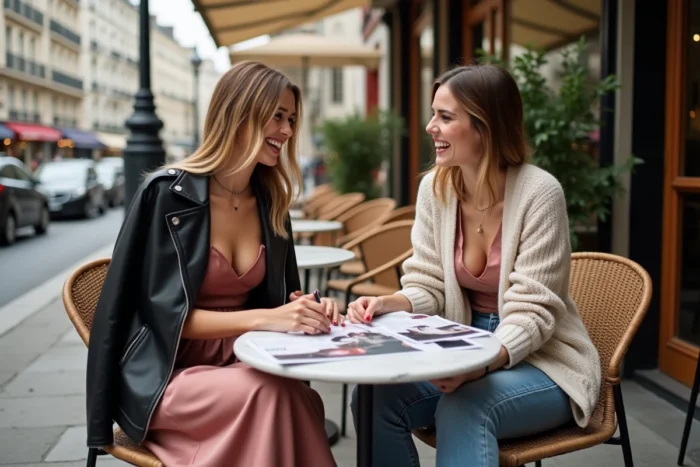
Bold jewelry is making a strong comeback, but with a different treatment than previous cycles. Voluminous pieces in brushed metal or colored resin replace the accumulation of fine jewelry. A single sculptural bracelet or a pair of architectural earrings is enough to anchor an outfit in the season.
Thick-strapped sandals with flat soles dominate the shoe segment. They meet a dual expectation: summer aesthetics and prolonged use in urban environments. Models in natural leather age better and align with the sustainability logic that permeates all categories.
The bag is simplifying. Compact formats and rigid materials (woven wicker, grained leather) are taking precedence over oversized soft bags. This reduction in volume reflects a change in the relationship to everyday objects: carry less, carry better.
Platforms and data: where to spot the next fashion trends
Monitoring tools have changed in nature. Search data (Google Trends, queries on marketplaces) allow for detecting an emerging trend several weeks before it saturates social media. Brands that anticipate exploit these weak signals to adjust their collections mid-season.
Independent specialized media are becoming reliable sources in the face of the loss of credibility of sponsored content on networks. The advertising ban stipulated by law 2026-602 will accentuate this shift of attention towards editorial platforms that analyze rather than promote.
This summer’s fashion is read as much in regulatory texts as on runways. The environmental penalty, the advertising ban, and the refocusing on traceable materials create a landscape where style is built on documented choices. Wearing the right piece at the right time remains the goal, but the criteria for defining “the right piece” have profoundly changed.